Commercial Waste Removal in Raynes Park
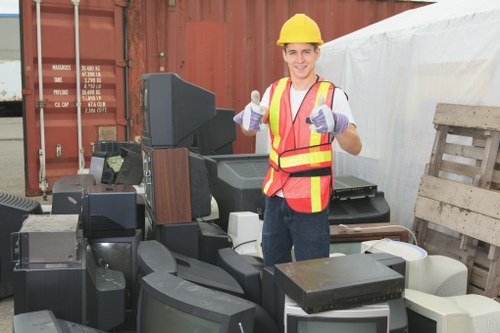
Commercial waste removal in Raynes Park supports shops, offices, workshops and other premises that need dependable collection of mixed business waste, recyclable materials and bulky items. Our service is designed to keep waste moving away from day-to-day operations in a tidy, organised way, with attention to sorting, loading and lawful handling. We work across regular and one-off clearances, helping customers arrange the right level of service for their site, schedule and waste type.
If you need a practical collection for routine refuse or a planned clear-out, we can help you choose the right approach from our business waste services and related disposal options. For a closer look at the main service, see the business waste removal page, which covers the core collection work for commercial premises. The aim is straightforward: keep business waste under control without adding avoidable disruption to staff, visitors or trading hours.
For a quotation, send the basics of what needs removing and the type of premises involved. You can also ask us to guide you toward the most suitable service route before anything is booked. Clear descriptions help make the quote process more accurate, especially where waste includes mixed materials, awkward access or heavier items.
Commercial collections arranged around your premises
Businesses often need waste removed in a way that fits around opening times, loading access and internal storage space. We handle collections that may include bagged refuse, boxed office waste, packaging, shelving parts and other non-hazardous commercial materials, subject to the exact items and local disposal requirements. The emphasis is on keeping the process organised so waste can be taken away efficiently and handled in the correct stream.
When the waste is linked to fit-outs, refits or general operational changes, it may be useful to look at the builders waste clearance service as well, particularly where the load includes rubble, timber, packaging or site debris. For more general clear-outs, our waste removal page gives a broader overview of the types of collection work available. These services can be useful when a single collection needs to cover more than one waste category.
In practice, businesses usually want three things from the process: clarity on what can be taken, a sensible arrangement for access, and a finish that leaves the space ready for normal use again. A good collection plan should also make separation easier where recyclable items, confidential materials or bulky objects need different handling. That is often the point where a short discussion before booking saves time later.
Office waste, paper streams and secure disposal

Office environments generate waste that is more varied than it first appears. Alongside general rubbish, there may be paper, card, packaging, redundant furniture, old IT peripherals and items that need particular care because they contain confidential information or electronic components. We help businesses arrange the removal of these materials in a structured way, so the contents of an office can be cleared without turning the job into a disruption.
Where the main concern is documents or records, the confidential shredding page is relevant because it deals with secure destruction of sensitive paperwork. If your office clear-out also includes desks, chairs or cabinets, our office clearance service explains how larger office items can be removed alongside general waste. Together, these services support a more orderly clearance than simply treating every item as mixed rubbish.
Helpful preparation is usually limited to a few sensible steps: separate items you definitely want to keep, identify anything that may need special treatment, and make sure access routes are usable on collection day. You do not need to over-organise the space, but it helps to know whether the job is a simple uplift, a fuller clearance or a mixture of waste types. That makes the quotation easier to match to the actual work.
Retail, hospitality and everyday business clearances
Retail and hospitality premises often need waste taken away in a way that respects customer areas, staff rooms and storage spaces. Packaging, display materials, old stock fixtures, worn furniture and back-of-house refuse can all build up quickly. Our service is geared toward practical removal rather than unnecessary complexity, with collections planned around what needs to leave the site and what must stay in place.
Some items may be better handled through dedicated disposal routes. For example, mixed furnishings can be reviewed through the furniture disposal page, while larger unwanted items can fall under furniture clearance. If the job is mainly a broad domestic-style emptying of a space rather than business waste alone, the flat clearance and home clearance pages show related removal categories that may help identify the right scope.
For business customers, the important decision is usually whether the waste is best grouped by item type, by room or by project stage. A shop refit may need a different approach from a weekly tidy-up, and a small café may need less than a large restaurant but still benefit from a planned uplift. Choosing the right scope up front can keep the collection straightforward and reduce unnecessary handling.
Bulky items, appliances and heavier loads
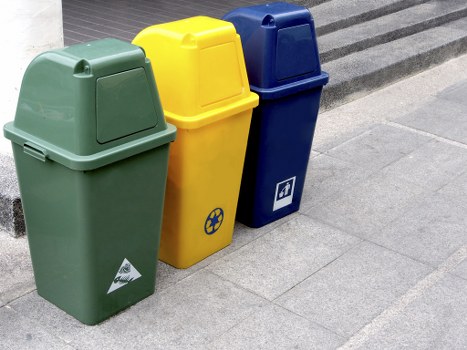
Some commercial clearances are not just about bins and sacks. Businesses also need bulky items removed, such as storage units, tables, broken fixtures, display furniture or out-of-use appliances. These loads can be awkward to move through narrow corridors, upstairs rooms or shared access points, so the collection needs to be organised carefully. Our approach is to treat bulky waste as part of the overall site plan, not as an afterthought.
Where appliances are involved, the fridge and appliance removal page is useful for items such as fridges, freezers and other electrical units that require appropriate handling. For larger domestic-style furnishings, the mattress and sofa disposal page may also be relevant. Where the business has a storage room, stockroom or garage-like outbuilding attached to the premises, the garage clearance service can help frame that kind of heavier item removal.
A helpful quotation usually depends on practical details: the approximate volume, whether items are loose or bundled, and whether lifting will involve stairs, lifts or shared entrances. If you can point out the heaviest or most awkward items, the collection can be planned around them rather than worked out on the day. That kind of clarity helps keep the removal orderly and better matched to the site.
Recycling, disposal routes and responsible handling
Commercial waste is rarely one single material stream. Cardboard, metals, plastics, wood, electricals and general rubbish may all appear in the same clear-out, and the right way to handle them depends on what they are and how they are presented for collection. We help businesses arrange disposal with sorting in mind, so recyclable material can be separated where appropriate and general waste can be directed through the proper route.
The recycling and sustainability page explains the broader approach to separating and processing waste, while hazardous waste disposal is the more suitable reference where the load includes materials that require specialist handling. Not every job needs that level of complexity, but it is important to identify the distinction early rather than discovering it halfway through a clearance.
Where there is uncertainty, it is better to describe the items plainly than to guess at the category. A mixed pile of packaging, office furniture and old equipment may be straightforward, but a container of chemical products or other restricted items needs a different conversation. Keeping those distinctions clear means the collection can be set up around the real waste stream, not a rough assumption about it.
Planning access, timings and site conditions

Commercial waste removal works best when access is planned in line with how the premises operate. That might mean a rear yard, a shared service entrance, a loading bay or a simple front-of-house handover depending on the property. We arrange collections with the practical layout in mind, so the process is suited to the building rather than forcing the building to suit the collection.
There are a few details that help shape the quotation and the collection itself: the location of the waste within the property, any restrictions on vehicle access, and whether items can be left ready in one area or need to be gathered from different rooms. Only two useful preparation points are needed here: confirm access and describe the waste clearly. That is usually enough to make the next step more straightforward.
If your business is also reviewing pricing, the pricing and quotes page gives a sensible place to start, while book online is useful when you already know the service type you want. Some customers prefer to discuss the scope before booking, especially where the site has limited access or the waste includes several categories. In those cases, a short written outline is often the most efficient starting point.
Waste from refurbishments, moves and workspace changes
Businesses often generate waste during moves, refurbishments or internal reorganisations. Old shelving, redundant fixtures, packaging, dismantled fittings and accumulated rubbish can all appear at once, and that mixture needs a collection plan that fits the pace of the project. We provide commercial waste removal that can support those transitional jobs without treating every item as a separate problem.
Where the work is tied to fitted interiors or structural changes, the builders waste clearance page remains relevant because construction-style debris often sits alongside commercial waste. For larger complete-room or complete-premises jobs, the house clearance and home clearance pages may also help explain the difference between a general clearance and a more focused waste uplift. The right category depends on what is being removed, not just on the name of the property.
Price factors are usually tied to volume, item type, access and disposal requirements rather than any single headline figure. A small, neatly stacked uplift is not the same as a load spread over several rooms, and specialist items may affect how the collection is arranged. Keeping the scope accurate at the start is the best way to make the quotation meaningful and avoid unnecessary back-and-forth.
About Raynes Park
Raynes Park is a residential district in southwest London, within the London Borough of Merton, and it developed as a suburban area after the coming of the railway in the nineteenth century. The neighbourhood sits between Wimbledon to the east and New Malden to the west, with the railway still shaping movement through the area. Its station lies on the South Western Railway network, and the local streets reflect the typical pattern of London suburbia: detached and semi-detached housing, interwar development, local shopping frontages and routes linking to surrounding districts. The area takes its name from a field or common associated with the Rayne family, and the wider district grew from land that was once more rural in character. Raynes Park has no large central square, but it does have a recognisable local centre around the station and main roads, where everyday shops and services form the commercial heart of the district. Nearby open spaces include Cottenham Park to the east and Wimbledon Common further across the borough, while the Beverley Brook runs through parts of the wider area before joining the Thames. The district is also close to Wimbledon Chase and the borders of neighbouring south-west London communities, giving it a distinctly local but well-connected character. Its setting is less about major landmarks than about a layered suburban landscape: late Victorian and early twentieth-century growth, transport links, everyday commerce and access to green space all sitting side by side.
Servicing mixed loads and specialist items
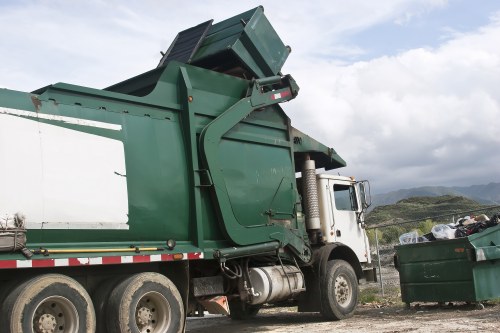
Mixed business waste sometimes includes items that do not fit neatly into one category. That may involve packaging beside fixtures, office paper alongside broken equipment, or storage-room contents mixed with day-to-day refuse. We can help separate the work into sensible streams where needed, so the removal reflects what is actually present rather than forcing the whole load into a single label. This is especially useful when a site is being emptied in stages.
For businesses with confidential paperwork, confidential shredding is the relevant secure route. If the job includes soft furnishings or larger loose items, furniture clearance and furniture disposal remain useful references. Where a single collection needs to cover a combination of appliances, furniture and general waste, it is better to identify the main categories before booking so the right route can be chosen first time.
Our final suggestion is simple: ask for a quotation once you know the item mix, then use the service pages to narrow the scope if needed. If the waste is straightforward, a short description may be enough. If it is varied, bulky or sensitive, a fuller outline helps. Either way, the goal is to make commercial waste removal in Raynes Park easy to understand and ready to plan.